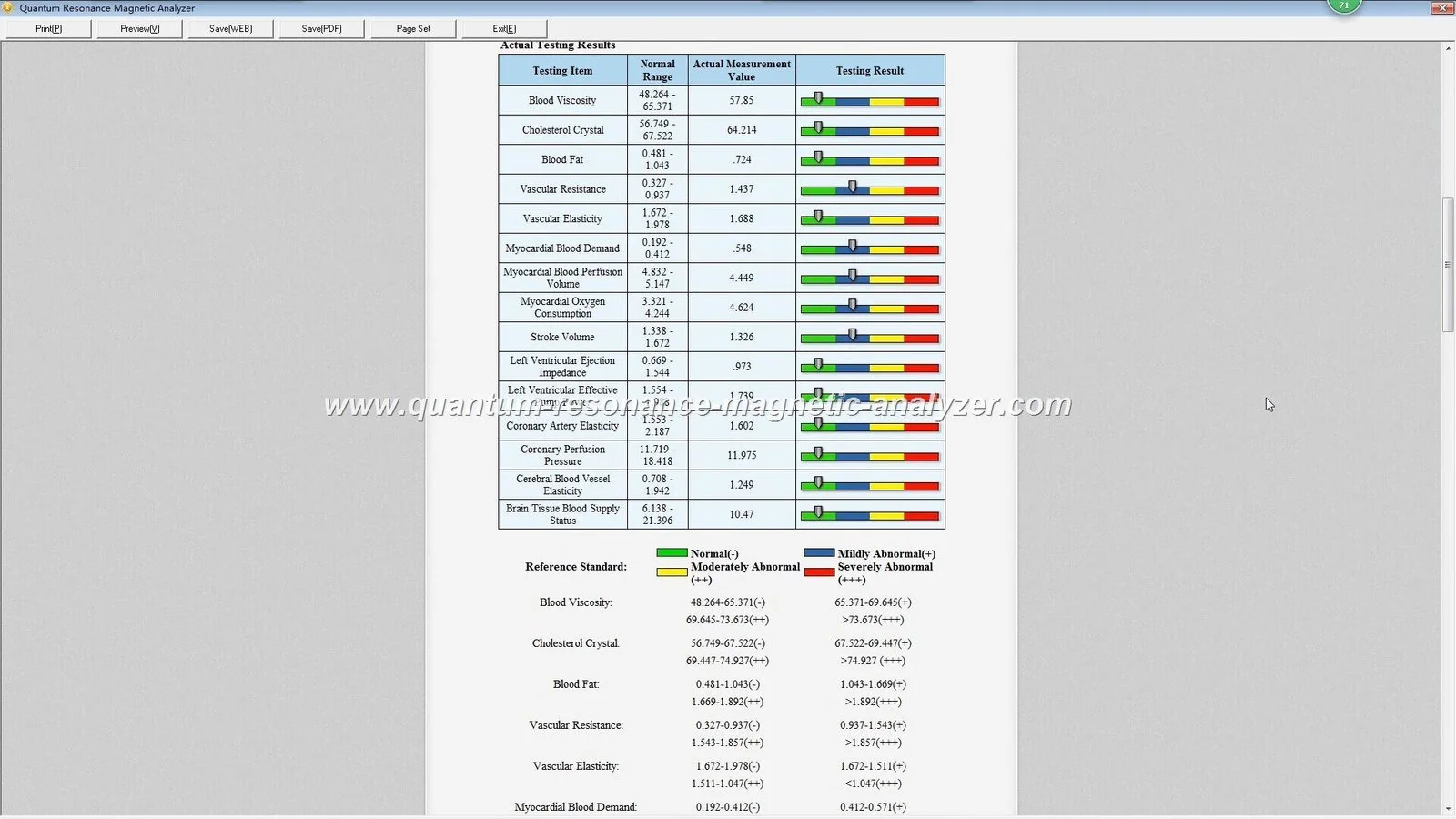
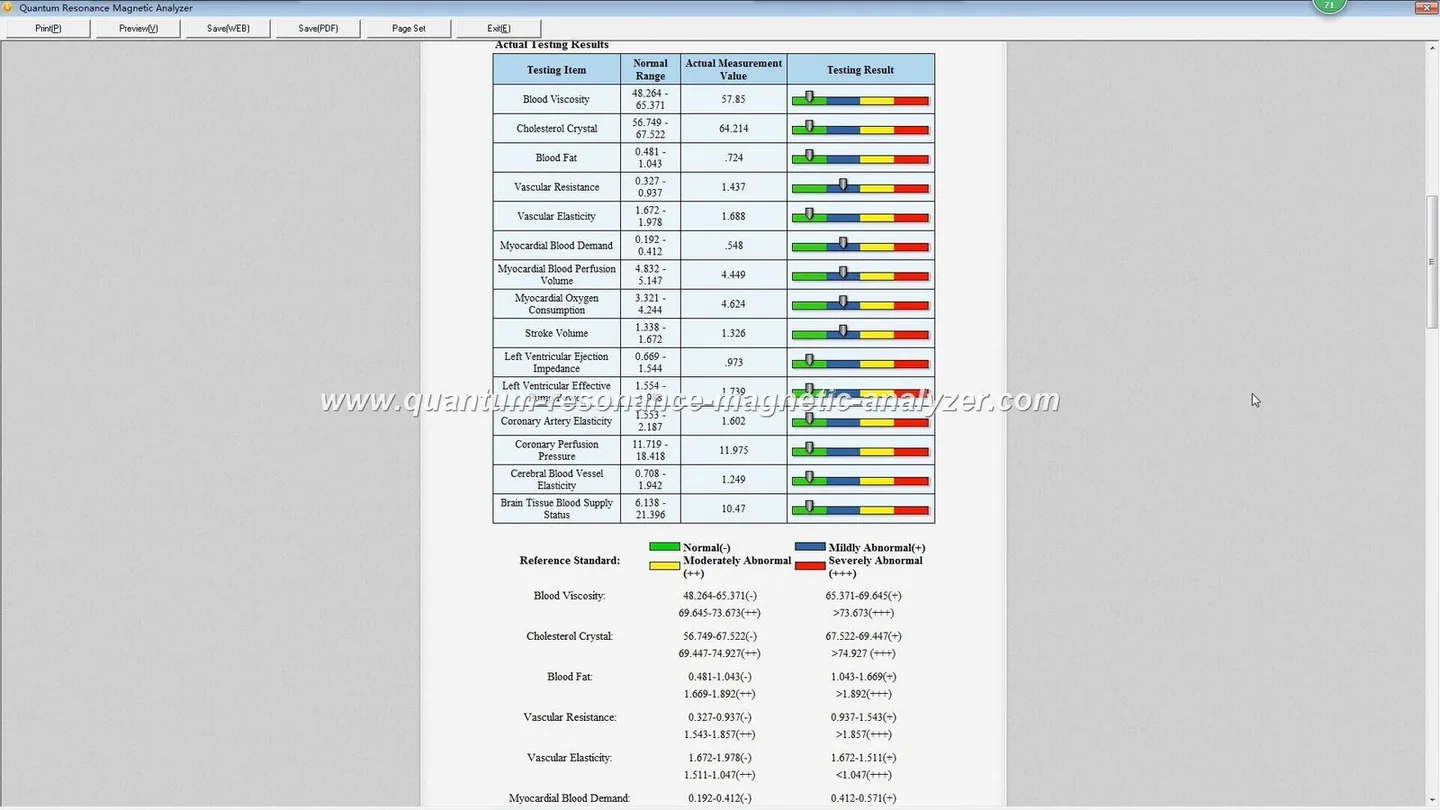
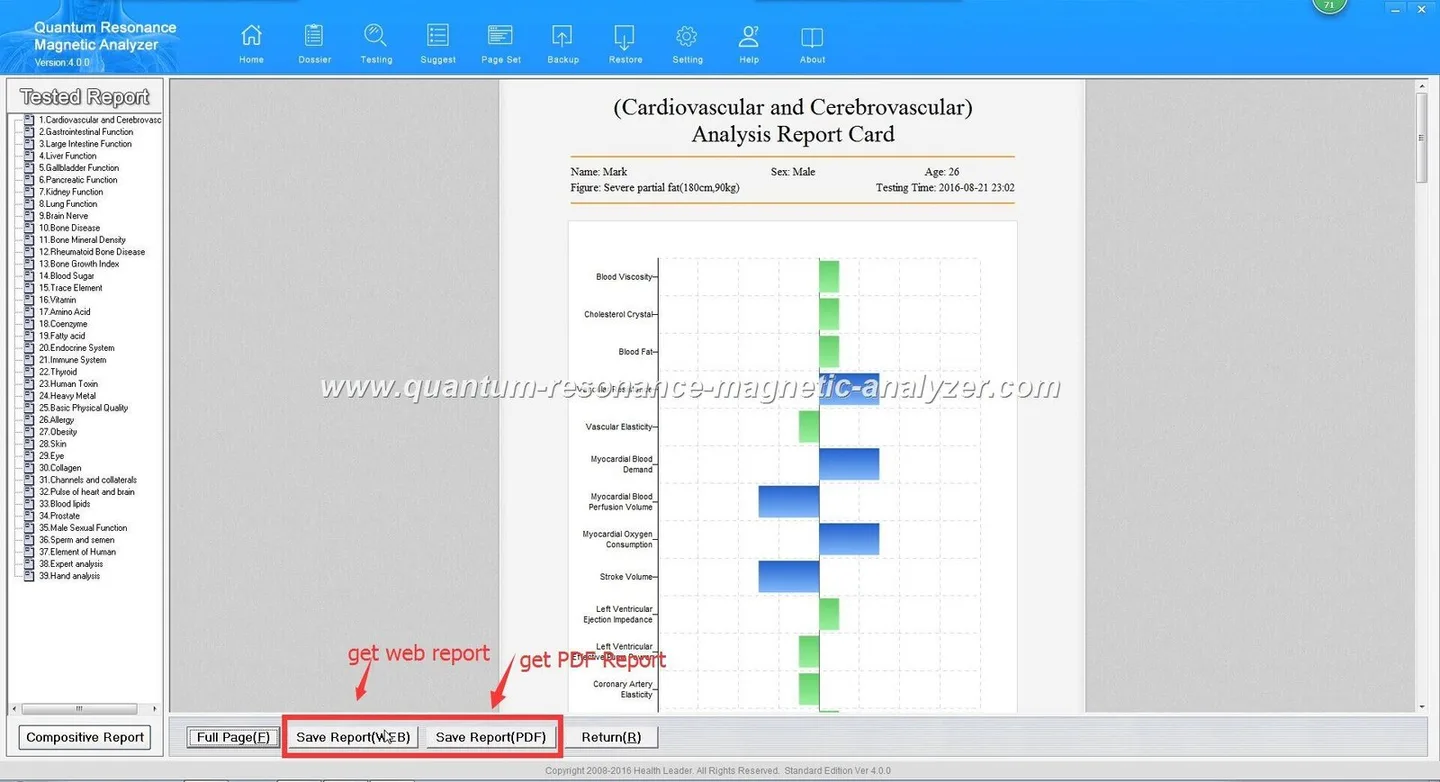
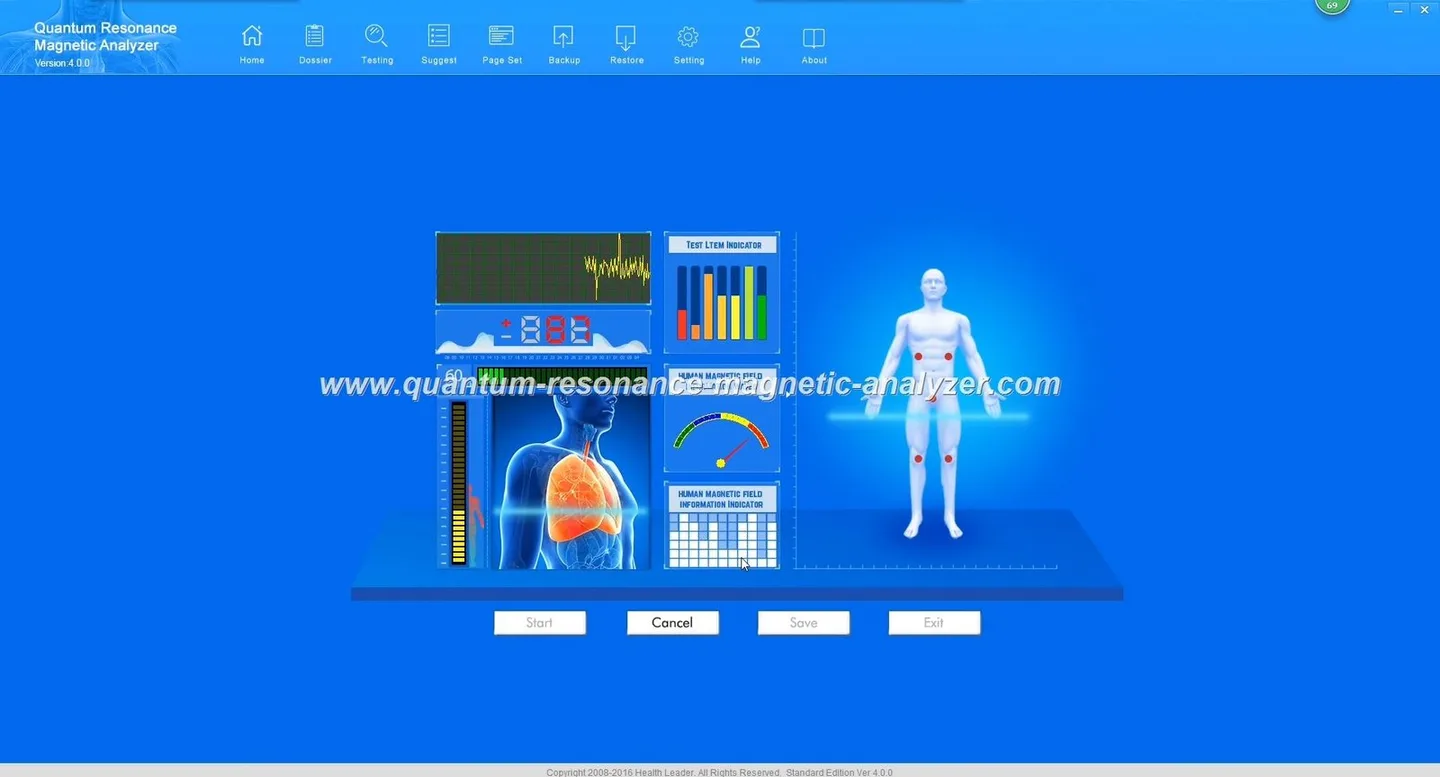
A quantum resonance magnetic analyzer report is a software-generated screening summary that groups signal-derived indicators into organ/system scores, alert flags and lifestyle notes. Read the one-page executive summary first (what is flagged, score band, recommended follow-ups), then confirm device metadata (model, software version, timestamp), review each organ/system panel and any raw-data export or trend graph, and finally treat findings as screening prompts — not a medical diagnosis. For verification, insist on the device model and software version shown on the report, the manufacturer’s declared certifications, and availability of raw export or PDF for audit. Use the report only as a client-facing conversation starter and pair any concerning findings with conventional clinical tests before advising treatment.
Contents
Direct answer to the buyer question
We answer from the perspective of screening-business operators: you want to know exactly what the report is telling you, which parts you can rely on for triage or referral, and what proof to request before you display results to clients.
Step-by-step reading method
Executive summary first. Look for a short summary or “health snapshot” that lists the highest-priority flags (e.g., organs or systems outside the normal band). This tells you what the software considers important at a glance.
Confirm provenance. Check the report header for device model, serial number, software name and software version. A valid report should show both the model and the software version used to generate it.
Interpret score bands. Most reports use colour or numeric bands (normal / borderline / alert). Learn your software’s scale so you can explain what a band means in plain terms to clients.
Open the organ/system panels. These explain individual systems (cardiovascular, liver, kidneys, endocrine, etc.). Use them to prioritise referrals, not to make diagnoses.
Check the raw output or export. If the system provides raw logs, CSV or a PDF export, save that. It supports transparency and lets you escalate with a copy for a medical professional.
Note recommendations and limitations on the report. Most vendor reports include a standard disclaimer or suggested next steps — follow that as your default guidance to clients.
We recommend training staff to read the report in under five minutes and to brief clients with two points: what the screening found and which conventional tests or practitioner referral are appropriate next.
Requirements and use context
A screening business in Nigeria will use these reports for triage, subscription health-check products, or wellness centre add-ons. Before you present results commercially you should confirm three operational things:
Staff capacity for client counselling. Reports contain alerts that can alarm clients; allocate staff time to explain screening nature and next steps.
Local regulatory environment and advertising rules. Avoid marketing the output as a medical diagnosis; present it as health screening and educational information only.
Verified specifications and evidence
How to read a Quantum Resonance Magnetic Analyzer report: a practical guide for screening entrepreneurs in Nigeria · body
We declare the following manufacturing standards for our devices: ISO 9001, CE and ISO 13485. These are company-declared certifications and should be verified against the device’s supplied certificate copies and the serial number on the physical unit before purchase or public use.
Typical report components used across the market include an executive summary, organ/system panels, score bands and exportable PDFs — we use the same structure so you can compare reports consistently when evaluating our device or others.
Items to verify on any supplied report before you accept it as fit for client use:
Model and software version visible on the report header;
Timestamp and operator ID for traceability;
Whether an export or PDF contains the raw or supporting data that you can save alongside client records;
Any vendor notes about algorithm updates — reports should indicate the software version used to generate results.
Selection criteria and buyer checklist
How to read a Quantum Resonance Magnetic Analyzer report: a practical guide for screening entrepreneurs in Nigeria · body
When choosing an analyzer for a screening business, base decisions on these practical items rather than marketing copy.
Report transparency: Can the software export PDF/raw data? If not, the report is harder to audit.
Software version control: Make sure every report shows the software version (for us: 2026 on MK001) so you know which algorithm produced the result.
Language support: For Nigerian clients, check local-language support. We provide multilingual packages; ask for local dialects if your clientele requires them.
Operational fit: Verify that the software runs on your clinic PC (we list Windows XP–11 compatibility for our software).
Service and warranty: Confirm warranty coverage and available local support; our standard is 1 Year warranty and lifetime software upgrades as a company offer — confirm this in writing for your purchase.
Regulatory compliance: Keep certificate copies on file and confirm whether local authorities require any additional registration for screening devices in your state.
Client pathway: Decide the clinical pathway you will offer after flags appear (referral lab tests, GP consultation, specialist referral). Don’t leave clients without a next step.
Risks, limitations and suitability boundaries
How to read a Quantum Resonance Magnetic Analyzer report: a practical guide for screening entrepreneurs in Nigeria · body
We must be explicit about what these reports are and are not.
Not a medical diagnosis. The report is a screening aid for health management and education; it does not replace laboratory tests, imaging or clinical examination. Do not advertise it as a diagnostic tool.
Algorithm and reference limitations. Results depend on the software version and the vendor’s internal reference bands. Different vendors (or versions) can produce different flags for the same client. Always cross-check critical findings with conventional tests.
Evidence gaps. If you need published clinical validation or peer-reviewed accuracy statistics for decision-making, request those studies. Our product record contains company-declared accuracy and scope; independently published validation may be limited or unavailable — treat that absence accordingly.
Legal and reputational risk. Presenting a screening report as definitive can cause harm to clients and legal exposure for your business. Use clear written consent and a standard counselling script before scanning.
If a finding appears serious, our recommended business practice is to escalate promptly using verifiable conventional tests rather than adjusting treatment on the basis of a report alone.
Frequently asked buyer questions
Can I show the report to clients as proof of health status?
Use the report as a screening summary and conversation tool. Always pair it with a written statement that it is a non-diagnostic screening output and recommend confirmatory clinical tests where appropriate.
What in the report should I keep in the client record?
Keep the PDF export or raw data file, the report header (with model and software version), the operator ID, and the client consent form. Those items support traceability in case of follow-up.
Which parts of the report can be audited?
Audit the device serial number, software version, timestamp and saved export. If a vendor cannot provide a verifiable PDF or export, consider that a transparency risk.
Next step and quotation requirements
Software package and language options (specify local dialects);
Requested documentation: certificate copies (ISO 9001, CE, ISO 13485 as declared), software licence terms, warranty statement and exportable report format;
Onboarding and staff training requirements (operator scripting and consent form templates);
After-sales support and spare-parts options for Nigerian operations.
Local compliance note: The screening report and its interpretation are for health-management education only and must not be used as a substitute for professional medical diagnosis, treatment or clinical tests. We do not promise diagnosis or cure, and any clinical decisions should rely on qualified medical professionals and conventional testing.
This content is provided for learning, information sharing and professional communication only. It is not medical advice and is not a basis for treatment or diagnosis. Confirm suitability, operation and purchasing requirements against the product manual, local regulations and qualified professional guidance.
If you want a configuration to match a Nigerian screening service (language package, training, warranty and local support), request a quote that specifies:
To start, contact our sales team with your clinic address, expected monthly scans and preferred language package. Pricing is supplied on request and may vary by configuration and optional training.